


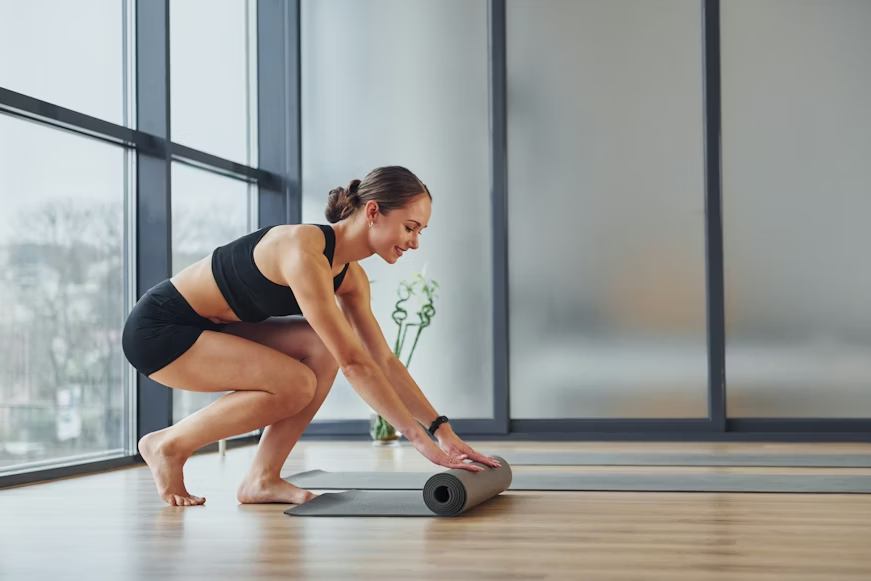
Body stretching and massage should be a daily routine for everyone who wants to reduce muscle soreness, tension, and fatigue. But the question is, do you always need to be going to a spa or booking appointments every day? No, you don’t.
With the help of self-massage and body stretching, you can effectively reduce body aches, improve circulation, and enhance your overall well-being. Importantly, you don’t need to rob a bank to do this; you just need space, common household items, and the knowledge of some simple techniques.
In this article are 7 practical self-massage tips you can do from the comfort of your home within 10-15 minutes to loosen up and reduce tension.
7 Easy Self-Massage Techniques to Try at Home
Below is the simple analysis of the self-massage techniques you can do at home, including their impact and how they can be done:
1. Neck & Shoulder Massage
Why it matters:
After a long day of work, sitting at the desk gazing at the screen for hours, you might end up feeling pain and discomfort in your neck and shoulders. Sometimes, you start feeling like a burden or a heavy weight is placed on your neck. But don’t worry, with a gentle stretching and short self-massage, tension would ease, and headaches would disappear.
How to do it:
- Find a comfortable seat and make sure you sit tall with your back well supported.
- Place your right hand on your left shoulder, above the collarbone.
- Gently use your fingertips to apply pressure from your neck down toward your shoulder.
- Do the same to your left neck and shoulder. You can spend 2-3 minutes on each side.
- Make sure you breathe deeply as you massage.
Benefits: Relieves neck stiffness, eases tension headaches, improves blood circulation, and loosens tight muscles.
2. Lower Back Relief
Why it matters:
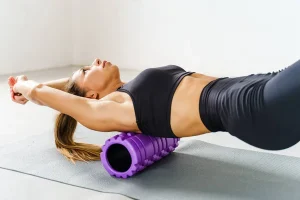
Lower back pain is a common issue almost everyone faces, resulting from daily stress and activities like lifting heavy objects in the wrong way, sitting for too long, and poor posture, among others. If nothing is done, the pain can accumulate, build up, and become complicated later. All you have to do is get a foam roller or tennis ball with a soft mat for this technique.
How to do it:
- Lie on your back with your knees bent and your feet firmly on the floor.
- Place the form roller or tennis ball under your lower back, making sure it’s well positioned.
- Gradually and gently roll your back over the foam roller or tennis ball, focusing on the sore areas.
- When you get to the tender spots, you can pause for like 20-30 seconds.
- Keep doing that until you start feeling relieved.
- Make sure you’re taking a deep breath to help your muscles relax.
Benefits: Enhance blood circulation, promote flexibility, release tension, reduce back pain, among other things.
3. Calf Massage
Why it matters:
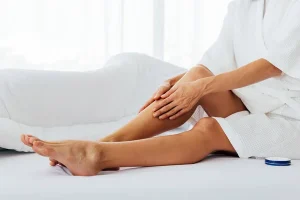
You might develop calf pain if you overstretch your calves by running, walking, or standing for an extended period of time. But with a simple calf massage, you can restore your mobility and reduce pain.
How to do it:
- Sit with one leg bent and the other extended.
- Then use your fingertips to knead your calf muscle.
- You can also use your knuckles to apply deeper pressure for effectiveness.
- Do the same with your second leg.
Benefits: it improves balance, reduces the risk of calf strains, and enhances mobility.
4. Foot Massage
Why it matters:
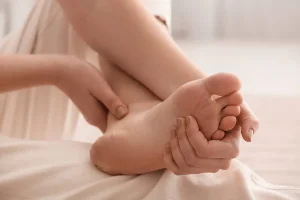
This is one of the most important massages you should do often, as it helps to boost circulation and reduce fatigue.
How to do it:
- Find a comfortable chair where you can easily rest your back.
- Place your right foot on your opposite thigh.
- Use your fingertips to apply pressure on the ball of your foot in a circular motion.
- You can also use a rolling pin to massage both feet simultaneously.
Benefits: Improve blood circulation, relieve pain, reduce stress, and lower blood pressure.
5. Hand and Wrist Massage
Why it matters:
We mostly use our hands and wrists to do a lot these days, including typing, writing, holding, and more. The price is hand and wrist pain, ache, and discomfort. You just need to engage in some self-massage techniques to relieve yourself.
How to do it:
- Let your left palm face up.
- Then use your right thumb to massage the center of the palm in circular motions.
- You can move from the center to the edges of the palm.
- Gently pull out each finger one after the other from the hand without applying force.
- Massage your wrist in circular motions.
- You can repeat the same process on your other hand.
Benefits: Reduced hand/wrist stiffness, better grip comfort, and reduced risk of overuse discomfort.
6. Head and Scalp Massage
Why it matters:
After a long day of work full of stress and anxiety, you might end up developing a tension headache, mostly reflected through scalp pain or forehead discomfort. What you just need is a head massage to relieve stress, increase blood flow, promote relaxation, and reduce tension headaches.
How to do it:
- Find and comfortable seat and sit comfortably.
- Use your fingertips to massage your scalp in a circular motion.
- Start from the forehead to your temples. Let the massage be light, don’t apply too much pressure.
- Take time to relax after.
Benefits: Relieve tension headaches, promote blood flow, reduce discomfort and scalp pain, among others.
7. Seated Hamstring Stretch
Why it matters:
A tight hamstring can change how you stand and move, which can cause low back pain and limit your daily tasks. All you have to do is try a seated hamstring stretch, and you will be fine.
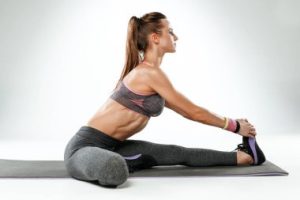
How to do it:
- You can sit on a yoga mat, preferably with one leg straight and the other bent so the sole rests against the inner thigh.
- Hinge at the hips and reach toward the straight foot. Make sure you keep your spine long.
- Hold like that for like 30-45 seconds and do the same process for the second leg.
- You can repeat the same process for like 2-3 times.
Benefits: It reduces low-back strain, improves walking and squatting comfort.
Tips to Maximize Your Self-Massage Routines
Just like the basic tips to know while preparing for a massage session, below are the tips you should take note of for an effective and safe self-massage routine:
- Warm up your body with light movement before you start.
- Don’t use hard pressure while massaging, but instead use a slow and steady pressure.
- Drink water before and after your routine to stay hydrated.
- Avoid massaging swollen, bruised, or injured areas.
- Make sure you regularly do your routine every day, even if it’s just 10-15 minutes a day.
- Stop immediately if you feel any unusual numbness, pain, or discomfort.
Conclusion
Self-massage is a better way to relieve yourself from body pain, tension headaches, muscle soreness, and back pain, among others. You don’t have to spend much or book an appointment. All you need is the right knowledge, consistency, and some basic tools.
However, if you want a massage service at home from professional and experienced technicians, you can reach out to Nooora Beauty Concierge, a home for on-demand beauty and wellness. Don’t fail to do that now to have an enjoyable massage experience.